
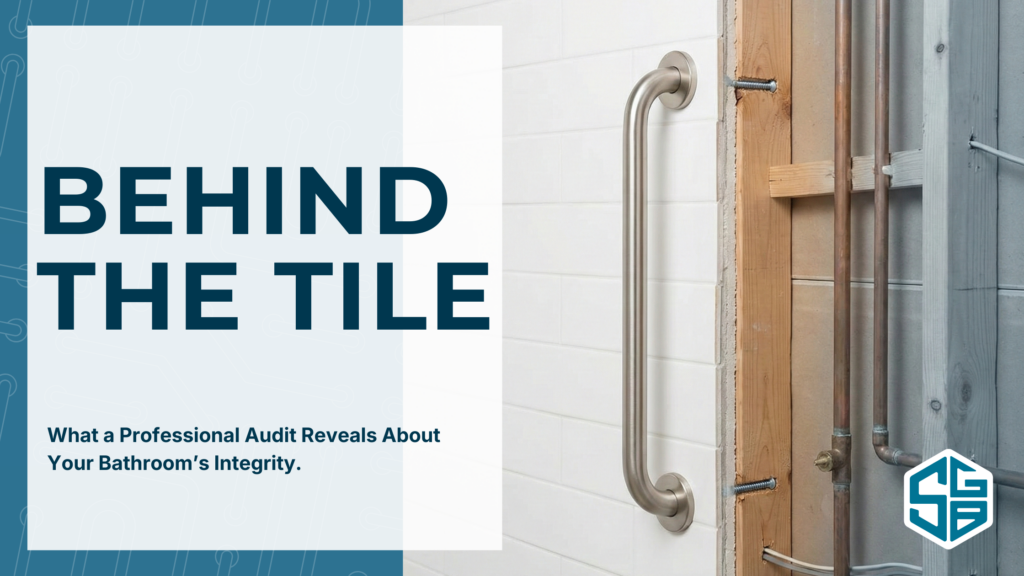
When we think about our homes, we think about comfort, memories, and that specific feeling of belonging. We think about the sturdy kitchen table where we’ve shared countless meals or the cozy chair in the corner. We rarely think about what’s happening three inches deep inside our bathroom walls.
At Simply Grab Bars, we know that for many of our clients, the decision to install safety hardware isn’t just a home improvement project, it’s an investment in independence. It’s about staying in the home you love for as long as possible. But here’s the thing: a grab bar is only as reliable as the wall it’s holding onto.
Think of it like a firm handshake. If the person on the other side isn’t leaning in, the connection fails. This is why we’re so passionate about the bathroom structural safety audit. It’s the invisible step that ensures your safety isn’t just a surface-level promise, but a structural reality.
The “Pipes and Power” Problem: Avoiding Costly Utility Strikes
If you’ve ever lived through a bathroom remodel, you know that those four walls are packed tighter than a suitcase on the last day of vacation. Between the tile and the exterior, there’s a complex web of hot and cold water lines, heavy-duty drain pipes, and electrical wiring for your lights and outlets.
When a well-meaning DIYer or a general handyman walks in with a standard hardware-store stud finder, they’re often flying blind. Those little plastic gadgets are great for hanging a picture frame in the hallway, but they have a hard time telling the difference between a solid wooden 2×4 and a copper water pipe.
Using “X-Ray Vision” for Your Home
Plumbing hazards during installation are one of the biggest hidden risks. If a drill bit nicks a water line, you might not even know it immediately. A tiny pinhole leak behind the tile can slowly weep into your subfloor for months, inviting mold and rot into your home’s foundation. By mapping out the no-fly zones before we ever pick up a drill, we protect your plumbing and your peace of mind.
Identifying “Soft” Walls: Detecting Moisture Damage and Rot
We’ve all seen it, that one tile in the shower that looks a little “off” or the grout that seems to stay dark long after the shower is over. In a bathroom, moisture is the silent intruder. Over decades, tiny amounts of steam and water can find their way behind the waterproof barrier, turning once-sturdy wooden studs into something resembling wet cardboard.
This is what we call a soft wall. If we were to install a high-load grab bar into a rotted stud, it might feel solid for a week or two. But the moment someone actually needs to put their full weight on it during a slip? The screws could pull right out of the softened wood.
Why a “Handshake” Test Isn’t Enough
A grab bar is designed to handle a sudden, dynamic force, upwards of 250 to 500 pounds in a split second. During our audit, we look for the telegraphing signs of internal decay that the naked eye usually misses:
- The Hollow Echo: We use specialized tools to check for consistent density across the wall.
- Wall Deflection: We check if the wall gives or flexes when pressure is applied.
- The “Pinhole” Check: In older homes, we look for signs that previous leaks have compromised the structural integrity of the backing.
Remember: a grab bar is only as strong as the wood or block it’s attached to. Our job is to make sure that “handshake” is rock solid.
Wall Thickness and Anchor Selection: Not All Walls are Created Equal
One of the most common questions we get is, “Can’t you just screw it into the tile?” The short answer is: absolutely not. The tile is just the “skin” of the room. To stay safe, we need to reach the “skeleton.”
However, every home has a different anatomy. Depending on when your house was built and where you live, your walls could be made of several different materials. Part of a bathroom structural safety audit is identifying exactly what we’re working with so we can choose the right grab bar mounting requirements.
| Material Type | The Challenge | The Solution |
| Standard Drywall | Easy to drill, but offers zero structural support on its own. | Must hit a stud or use industrial-grade bracing. |
| Green Board | Water-resistant, but still just paper and gypsum. | Requires precise finding studs in bathroom walls. |
| Plaster & Lath | Found in historic homes; very brittle and prone to cracking. | Requires slow, specialized drilling to avoid “spider-web” cracks. |
| Concrete Block | Common in coastal areas; very strong but needs depth-specific masonry anchors. | Specialized carbide-tipped bits and high-tension anchors. |
Choosing the wrong anchor selection for your specific wall type is like wearing flip-flops to hike a mountain, it might work for a few steps, but eventually, you’re going to lose your footing.
Why a Visual Inspection Isn’t Enough for a High-Load Rating
There’s a dangerous myth in home DIY: “If it doesn’t wiggle, it’s safe.”
When you give a newly installed grab bar a quick tug, you’re testing its static load. But safety bars aren’t for holding onto while you wash your hair; they are for catching you when you are falling. That’s a dynamic load. It’s the difference between gently sitting on a chair and jumping onto it from a ladder.
To meet ADA standards and provide true security, we look for what builders call “backing.” This is extra wood installed horizontally between the vertical studs to provide a wide, dense target for our mounting screws.
Expert Tip: The Density Secret
Expert Tip: Never install a grab bar without first verifying the backing material density. We often see installations where the screw just barely caught the edge of a stud. It feels tight today, but over time, the vibration and weight will cause it to cheese-wire through the wood. A professional ensures the screw is centered in high-density material for maximum bite.
The Simply Grab Bars Difference: We Care About the Person, Not Just the Project
We know that inviting someone into your home, especially into a private space like a bathroom, requires trust. That’s why we don’t just install hardware. We act as your home’s structural detectives.
When we perform an audit, we aren’t just looking for studs; we’re looking out for you. We want to make sure that when you reach out for that bar, it’s there for you with the same strength and reliability that you’ve put into your home all these years.
A professional bathroom structural safety audit protects you from the three things no homeowner wants:
- The False Sense of Security: Knowing your bar won’t fail when you need it most.
- The “Surprise” Repair Bill: Avoiding the $5,000 bill that comes from a punctured pipe.
- The Stress of Uncertainty: Knowing the job was done to professional, high-load standards.
Your home should be your sanctuary. By looking deeper than the tile, we make sure it stays that way.
Ready to see what’s behind your walls? Don’t leave your safety to luck or a $10 stud finder. Contact us at Simply Grab Bars today for a professional assessment. We’ll bring the scanners, the expertise, and a helping hand to make sure your home is as safe as it feels.