
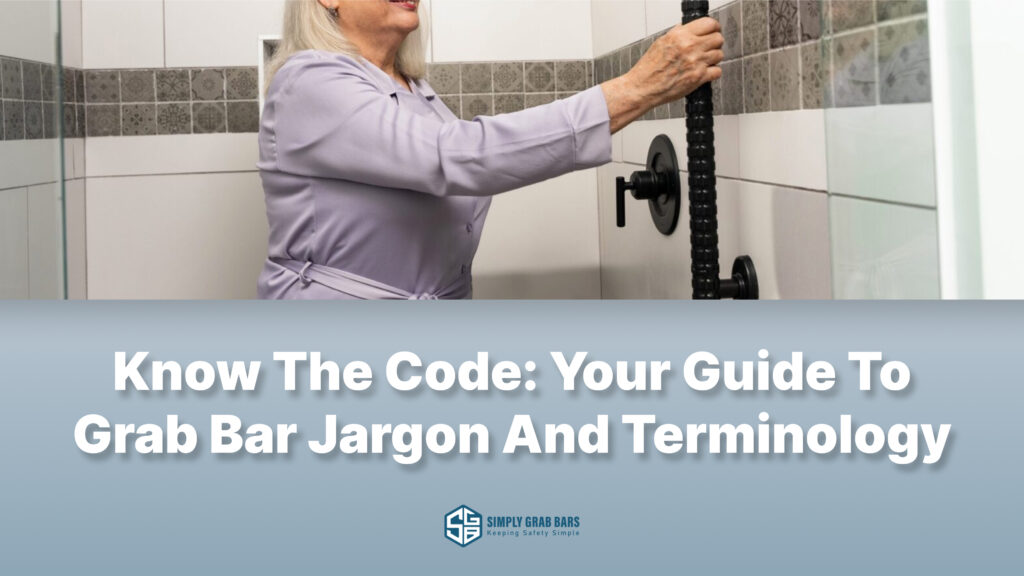
If you’re new to grab bars, the technical terms and jargon can be confusing. Understanding the language used around grab bars can help you make informed decisions when it comes to choosing, installing, or discussing these essential safety features. Here’s a guide to common terms and phrases in the world of grab bars, explained in simple language.
ADA Compliant
The term “ADA compliant” refers to grab bars that meet the standards set by the Americans with Disabilities Act (ADA). These regulations are designed to make sure grab bars provide adequate support and accessibility for people with disabilities.
- Example: Grab bars that are ADA compliant typically have a diameter of 1.25 to 2 inches and can support at least 250 pounds.
Weight Capacity
Weight capacity is the maximum weight that a grab bar can safely support without failing. Grab bars used in bathrooms or other high-risk areas should have a weight capacity of at least 250 pounds to ensure safety. At Simply Grab Bars, our fasteners have been tested up to 500 lbs of weight.
- Example: Always check the weight capacity before purchasing to ensure it meets the user’s needs.
Knurled or Textured/Peened Grip
This term refers to grab bars that have a textured or patterned surface, which provides extra grip. A knurled or textured finish is designed to reduce slipping, especially in wet conditions like showers.
- Example: If a grab bar has a knurled surface, it’s less likely to slip out of your hand when wet.
Swing Up Flip-Up Grab Bar
A swing-up grab bar, also known as a fold-down grab bar, can be folded against the wall when not in use. It’s ideal for areas with limited space, offering stability when needed without obstructing movement.
- Example: Flip-up grab bars are often used in small bathrooms or near toilets.
Vertical, Horizontal, and Diagonal Installation
These terms describe the orientation in which a grab bar can be installed:
- Vertical: Best for providing support when entering or exiting a shower.
- Horizontal: Offers support when moving from a seated to a standing position, such as near toilets.
- Diagonal: Provides a more natural grip angle, especially in showers or along staircases.
- Example: Knowing the difference between vertical and horizontal installation can help you decide where to place the grab bar. Your Simply Grab Bars installer will provide an assessment and give recommendations for proper placement and angle.
Suction Grab Bars
Suction grab bars are temporary grab bars that attach to smooth surfaces using suction cups. While convenient for travel or short-term use, they are not as secure as permanently mounted grab bars.
- Example: Suction grab bars are not recommended for heavy use or as a permanent solution.
Stainless Steel
Stainless steel is a common material used for grab bars because it is durable, rust-resistant, and easy to clean. It is suitable for wet environments like bathrooms.
- Example: Stainless steel grab bars are often used in showers and bathtubs because they resist corrosion. Simply Grab Bars provides stainless steel grab bars and fasteners/screws.
Diameter
The diameter of a grab bar refers to its thickness. The standard diameter for grab bars is between 1.25 and 2 inches, which is considered an ideal size for gripping.
- Example: Grab bars with a 1.5-inch diameter provide a comfortable grip for most users.
Shower Standing Handle
A shower standing handle is essentially a grab bar designed specifically for use in the shower. It provides support for individuals when entering, exiting, or standing in the shower.
- Example: Installing a shower standing handle can greatly reduce the risk of slipping.
Grab Bar Anchors
Anchors are hardware used to securely mount a grab bar to the wall when a stud is not available. They provide the necessary support and stability for the grab bar.
- Example: Using the right type of anchor is crucial to ensure that the grab bar can support the user’s weight.
Corrosion-Resistant
Corrosion-resistant grab bars are made from materials or coatings that prevent rust, especially in damp areas like bathrooms.
- Example: Look for grab bars labeled as corrosion-resistant to ensure longevity in high-moisture environments.
Concealed Mounting
Concealed mounting refers to grab bars that are installed with the screws hidden behind a cover plate/escutcheon. This design gives a more polished, clean appearance.
- Example: Grab bars with concealed mounting provide a sleek look while still being fully functional.
Understanding these terms will help you make more informed choices when it comes to grab bar selection and installation. At Simply Grab Bars, we’re here to guide you through the process with professional advice and top-quality products.
For expert advice on grab bar installation, contact Simply Grab Bars today to ensure your home meets the highest safety standards.